
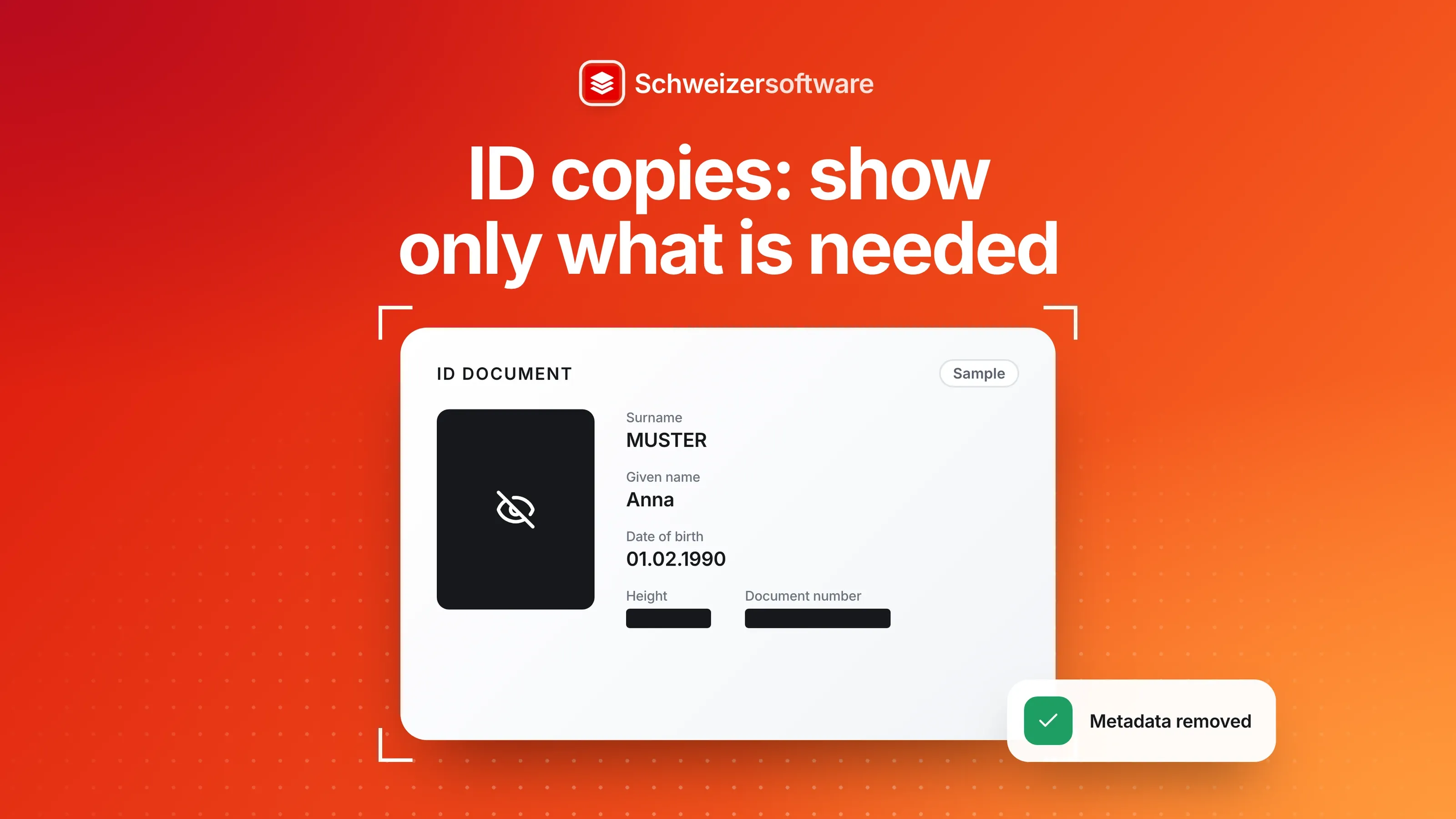
ID copies: show only what is needed
When a copy of an identity card is requested, what is on it, what the FDPIC says can be made illegible and how to crop the copy cleanly.
6 min read
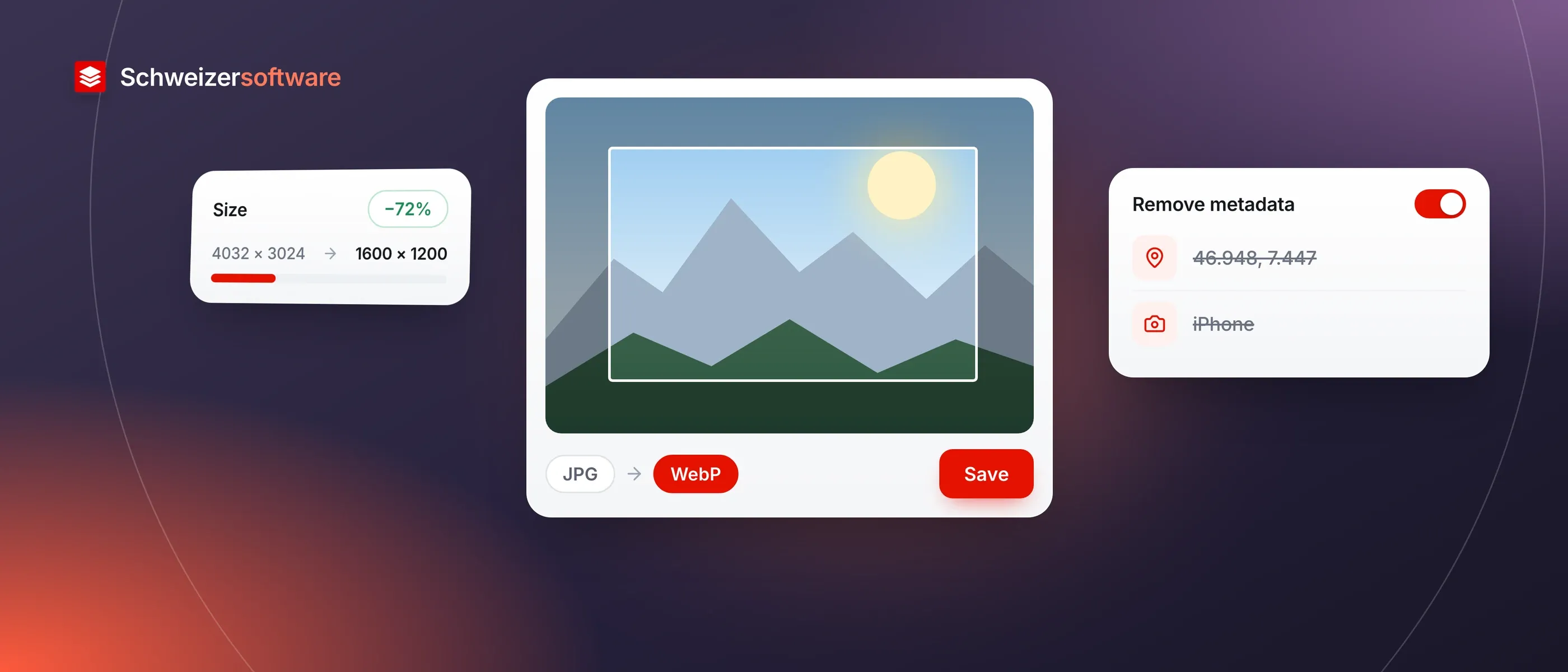
Image tools
Compress, resize, crop, convert and remove metadata — in one web app for businesses and individuals in Switzerland. Images will be processed in Switzerland, in memory, and nothing is stored.
For now, it is an idea.
A photo is too large for the website, an iPhone picture will not open for the person you sent it to, a copy of an ID should show only what is needed. For small jobs like these, images often end up with an online service where it is unclear where it runs and what it does with the files. And many photos carry more than the picture: the place it was taken and the device that took it.
We are building the image tools as a web app run in Switzerland. An image should exist only for as long as the work takes: it is processed in memory, the result comes back to you, and nothing is stored. For private photos and ID documents, a confidential mode will do selected jobs directly on your device.
For small businesses in Switzerland that prepare images for their website, listings or documentation — and for individuals who want to shrink photos, crop a copy of an ID or share family pictures.
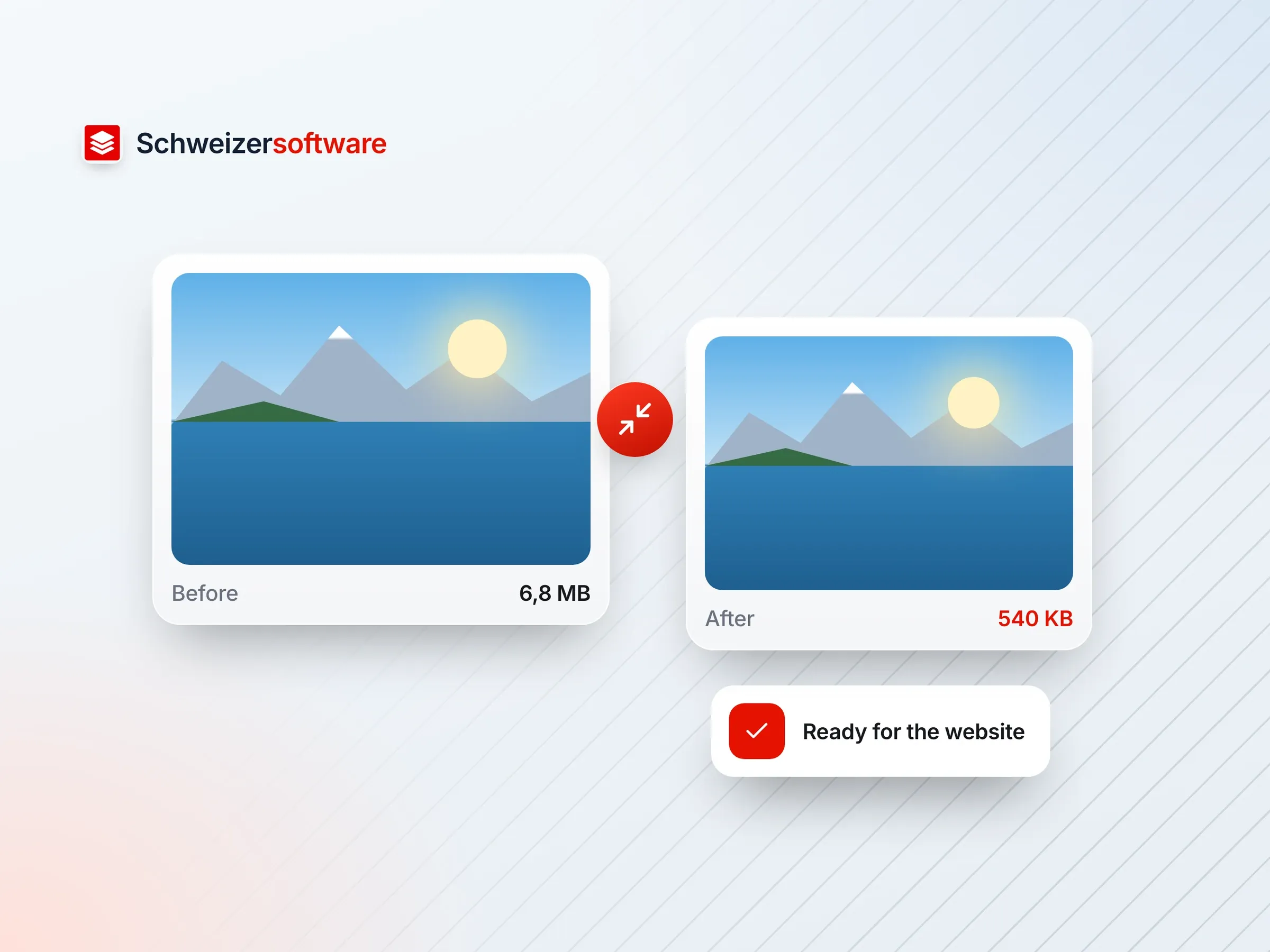
An image will be brought to a file size or dimensions that suit a website, a listing or an email. You see how much smaller it gets before you download it.
Crop to a section, fit to a fixed aspect ratio or straighten — so that a copy of an ID, for example, shows only what it should.
JPG, PNG, WebP and HEIC, the format of the iPhone camera, will convert into one another. A photo then opens even where its original format is not supported.
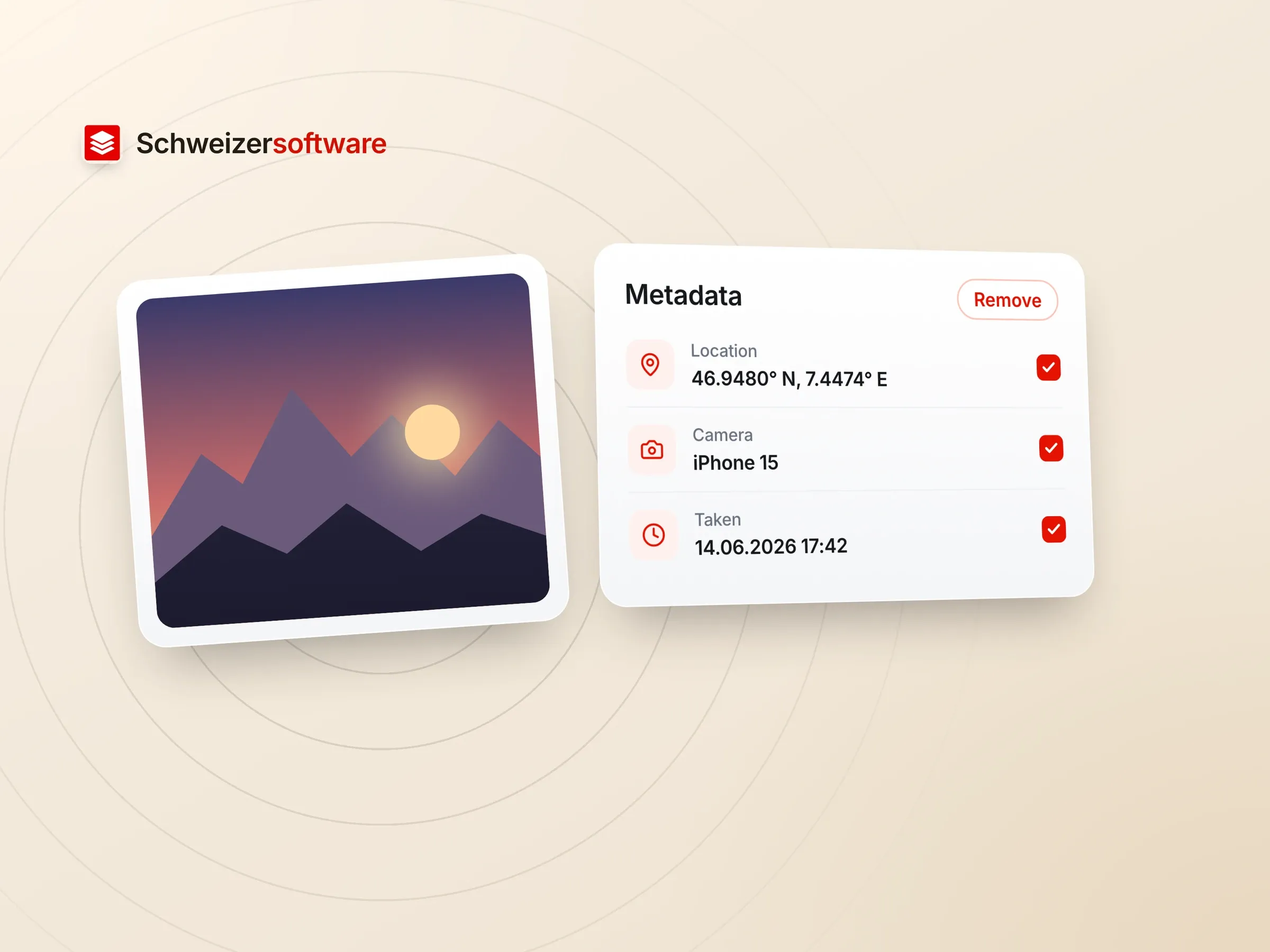
Many photos carry the location, the date and the camera model inside them. The app will show what an image contains and remove those details on request before you pass it on.
For selected jobs, the app will move the processing entirely into your browser. The image then does not leave your device — not even to Switzerland.
An image is processed in the memory of a server in Switzerland and is not stored. The app will show no advertising, follow no visitors and sell no data.
The same commitments apply to every app that grows out of our ideas.
Our apps store your data on infrastructure in Switzerland. Where exactly is stated on one page – not spread across several documents.
We do not sell, rent or pass on your data. We earn from the app, not from what you entrust to it.
Your data is not used to train AI models. Not ours, and not anyone else’s.
We design to the Swiss Data Protection Act and build privacy in from the start – not as an adjustment at the end.
Is your question not answered here? Write to us – we read every message.
ContactOn servers in Switzerland — or, in confidential mode, directly in your browser. This website itself is delivered through an international provider; what is held where is set out in the privacy policy.
No. The app is being built so that an image is processed in memory only and discarded afterwards, never written to disk. That describes how it is built, not a guarantee; we will publish the technical details before launch.
Often the date it was taken, the camera model and, if location services were on, the GPS coordinates of where it was taken. The app will show these details before removing them, so you can see what would be passed on.
No. We do not sell, rent out or pass on your data, and we do not use it to train AI models. The app will also show no advertising and use no tracking.
There is no date yet. For now it is an idea we are working on; when it launches we will tell you once, if you would like us to. How many people are waiting for an idea helps us decide the order in which we build.
The price is not set yet. It will be shown in CHF and be clear enough for a small business to decide on without a procurement process. We will name a figure once it is real.
No, signing up is non-binding. You receive a single message when the app launches, and nothing else. We use your email address for that and nothing more; what we store is set out in the privacy policy.
When a copy of an identity card is requested, what is on it, what the FDPIC says can be made illegible and how to crop the copy cleanly.
6 min read
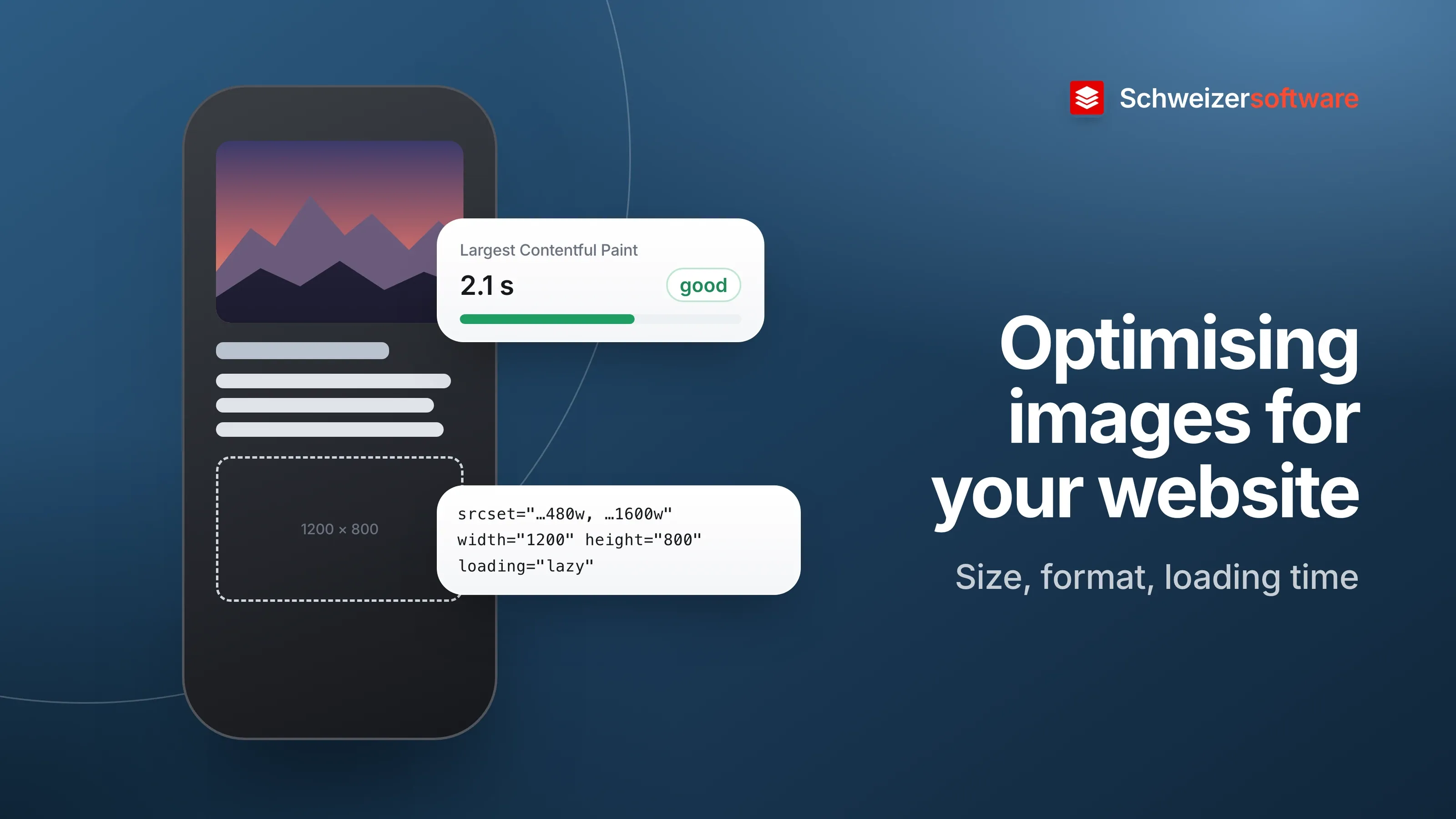
How images shape a website’s loading time and what helps: the right size, several versions, modern formats, width and height, lazy loading, alt text.
6 min read
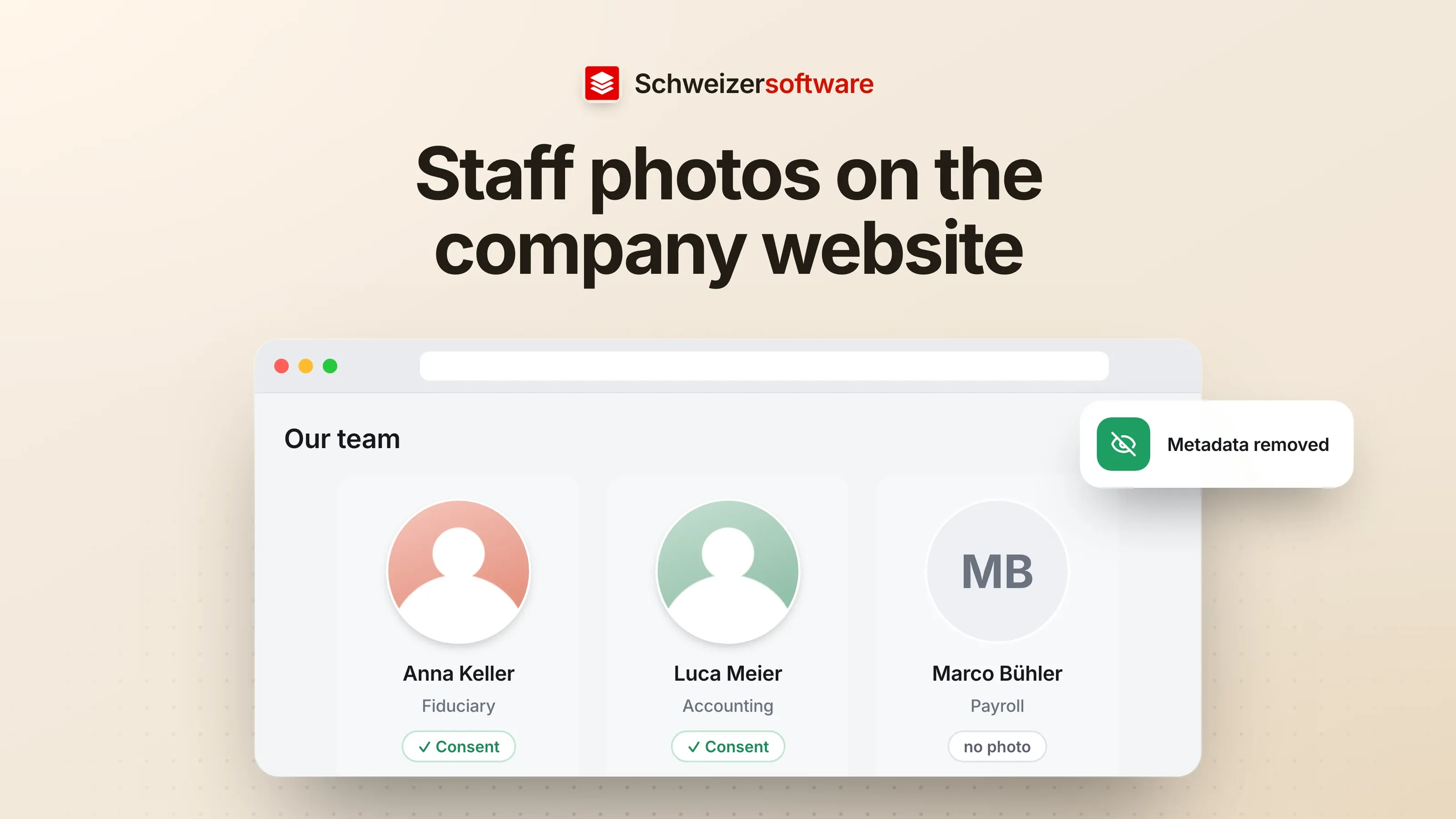
The right to one’s own image, consent and withdrawal: what the Civil Code, the FADP and the FDPIC say when a business shows its team on its website.
6 min read
This idea is still being planned. Sign up and we will write to you once, when it becomes an app. Signing up is non-binding – no newsletter, no advertising.