
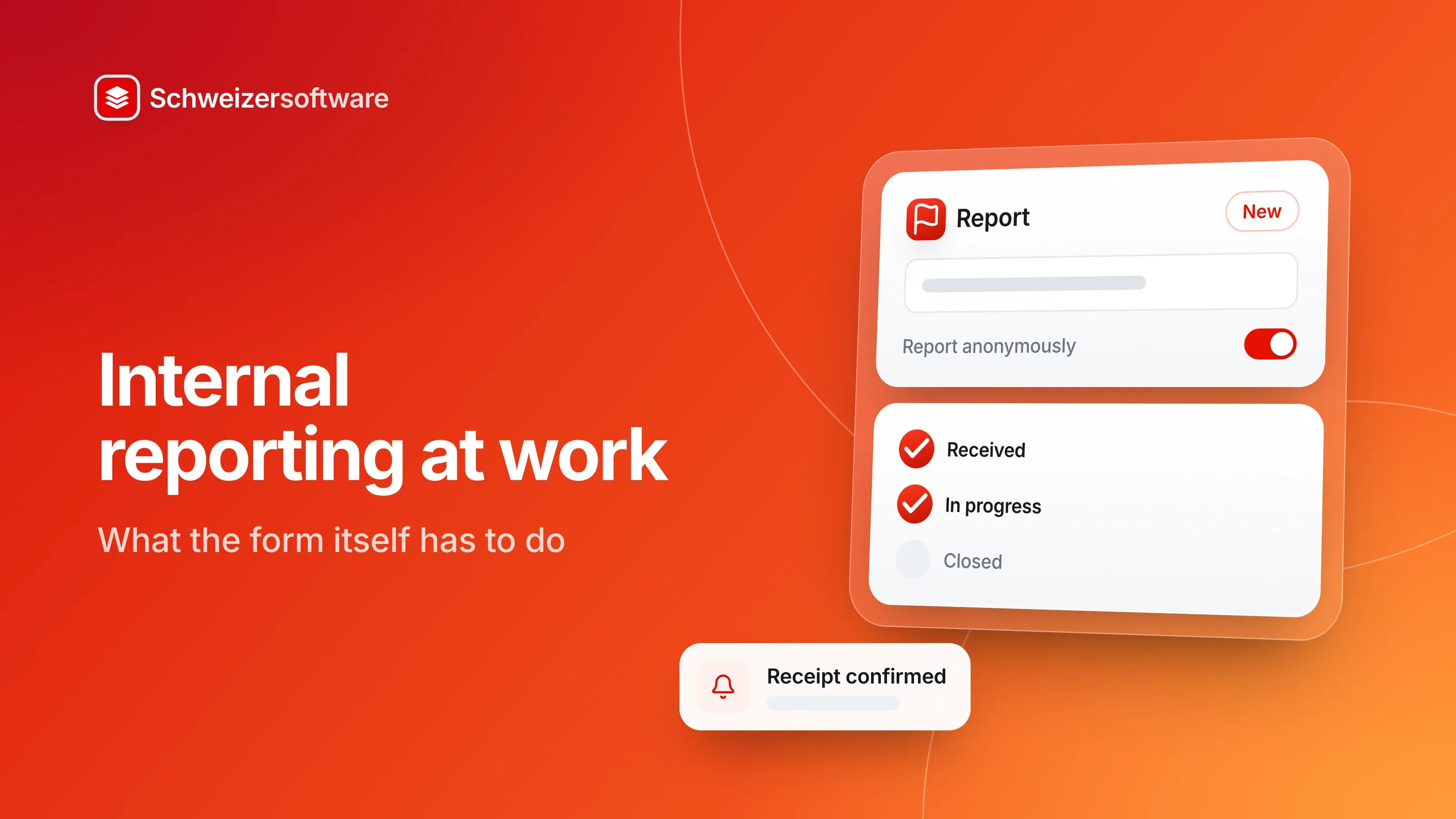
Internal reporting: what the form itself has to do
When staff are meant to report something internally, the form decides who reads it, whether the sender can stay anonymous and how a reply finds its way back.
10 min read
Forms
A web app for online forms, for businesses and private individuals in Switzerland. Responses are encrypted in the browser, and the service and the data stay in Switzerland.
Businesses and organisations take in personal data through forms every day: registrations, enquiries, medical histories, job applications, reports. Much of it runs on paper, on email attachments, or on a form tool where it is hard to say where the responses sit and who can open them. When a patient, an employee or a club member asks about it, there is rarely an answer that fits into one sentence.
We are building Forms as a web app for Switzerland. Responses are encrypted in the browser of the person filling the form in, and can only be made readable again with your own key — the app is being built so that we cannot decrypt the contents. The service and the stored data are in Switzerland, and the app is designed around the Swiss Data Protection Act (FADP).
For Swiss businesses and organisations that receive personal data through forms — practices and therapists, law and fiduciary offices, schools, associations, HR and reporting processes — and for private individuals who want to run a registration or a survey properly.
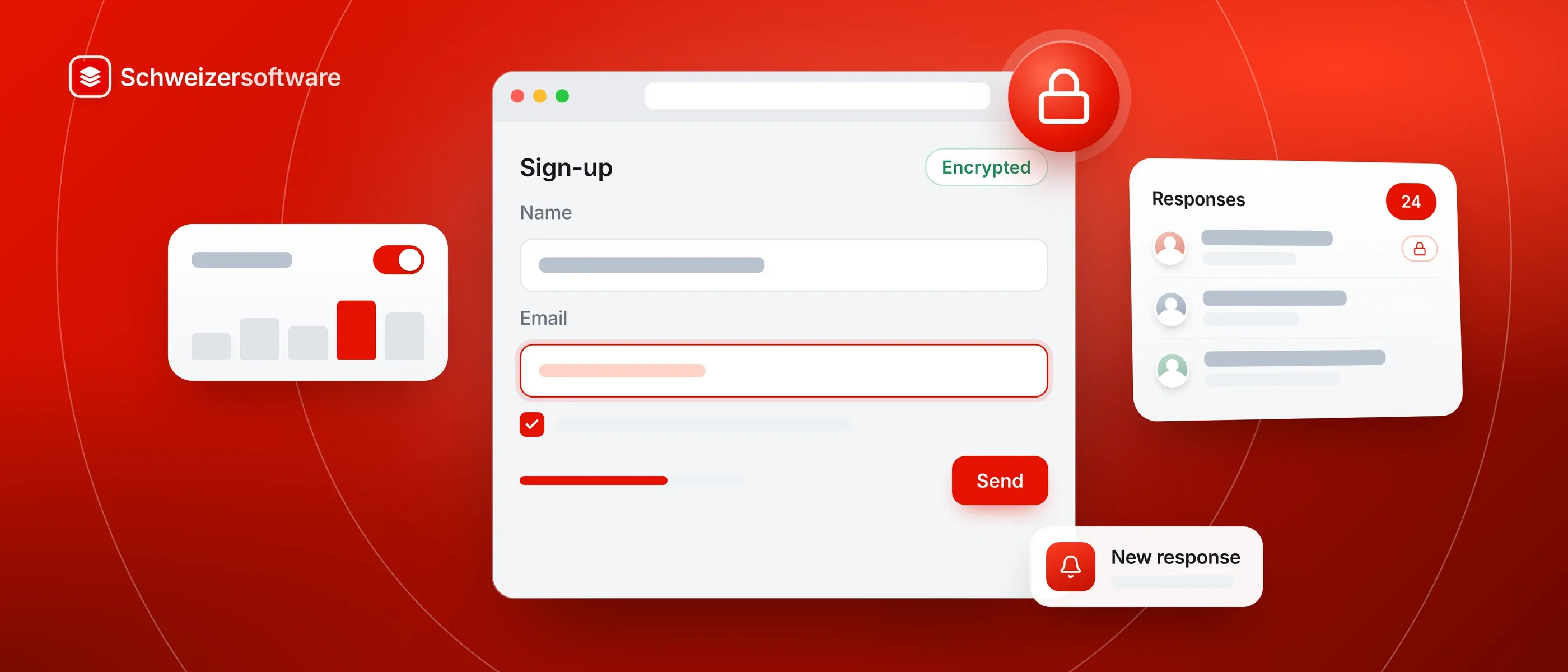
Fields are put together by drag and drop: text, choice, date, file upload. The finished form gets a plain public link that you can pass on.
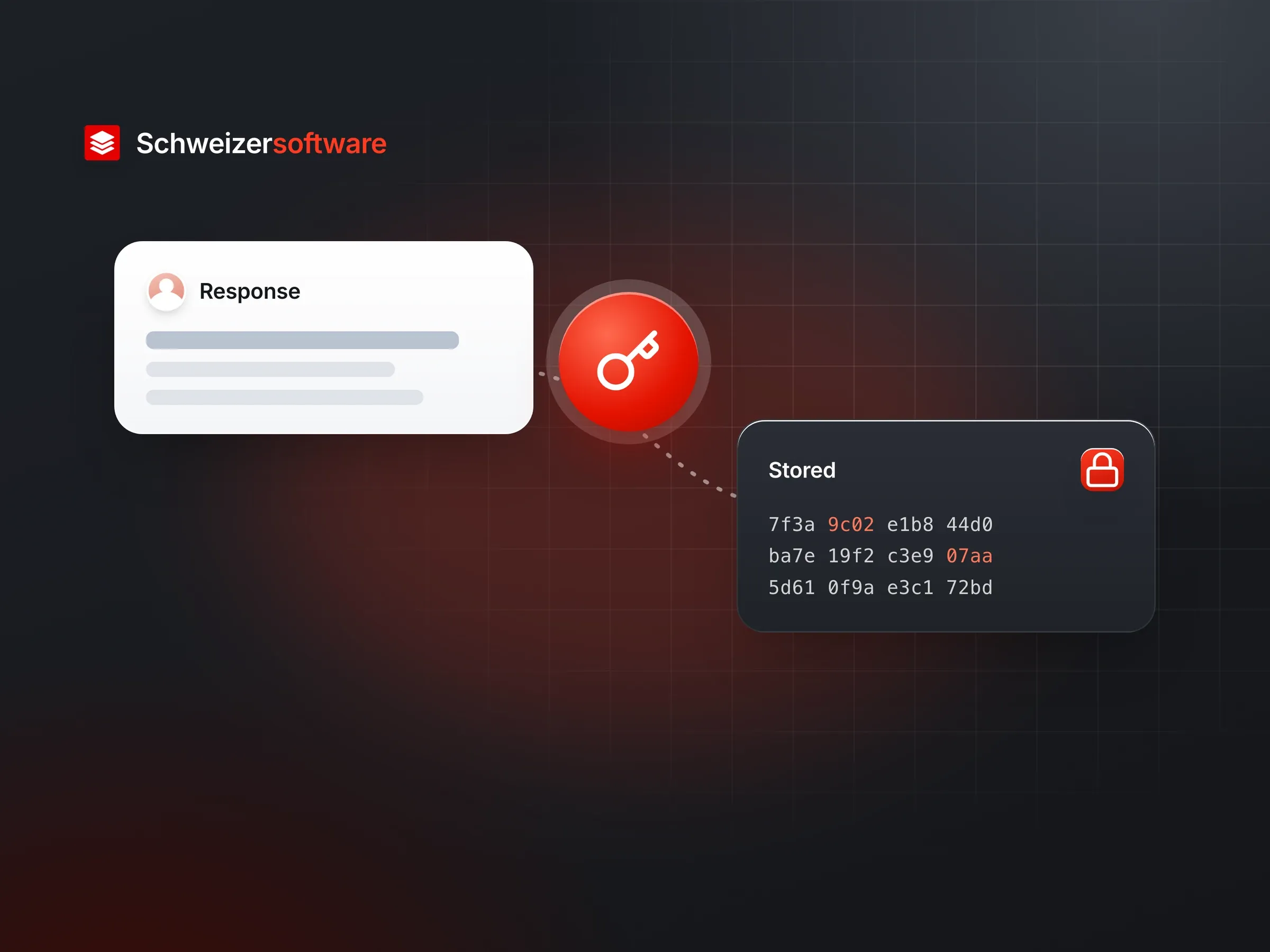
Responses and uploaded files are encrypted in the browser of the person answering, and decrypted again only in yours, with your own key. The app is being built so that we cannot read the contents.
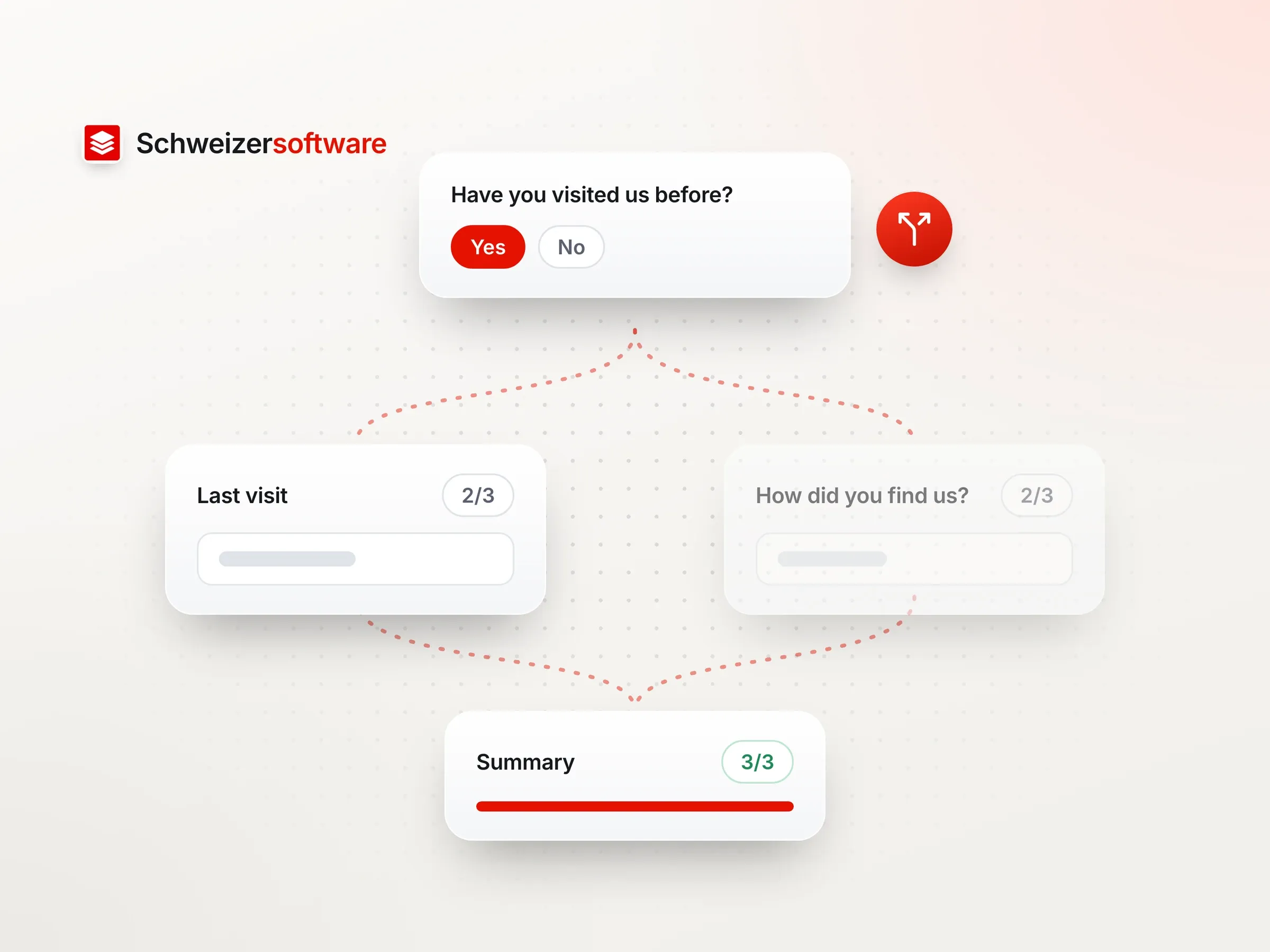
A question is shown only when it fits the answers so far, and long forms can be spread over several pages. Anyone who does not finish in one go will be able to save and continue later.
A short description turns into a first draft that you then edit yourself. The same help will carry a form over into the other national languages. It works on the questions you write, not on the responses that come in.
Several people will be able to work on the same forms, with roles for who may edit and who may read responses. Anyone who is to read responses is given access to the key.
A data processing agreement will be available. Retention periods and automatic deletion rules are set by you, per form, and an overview shows clearly which data is stored and for how long.
The same commitments apply to every app that grows out of our ideas.
Our apps store your data on infrastructure in Switzerland. Where exactly is stated on one page – not spread across several documents.
We do not sell, rent or pass on your data. We earn from the app, not from what you entrust to it.
Your data is not used to train AI models. Not ours, and not anyone else’s.
We design to the Swiss Data Protection Act and build privacy in from the start – not as an adjustment at the end.
Is your question not answered here? Write to us – we read every message.
ContactOn infrastructure in Switzerland — the responses as well as the uploaded files. This website itself is delivered through an international provider; what sits where is set out in the privacy policy.
The app is being built so that we cannot: responses are encrypted in the browser of the person answering, and the key that decrypts them stays with you. That describes how the app is built, not a guarantee. We will set out how the encryption works in detail before launch.
The responses concerned cannot be recovered, by us either. That is the other side of being the only one who can decrypt them. The app will walk you through backing the key up when you set it up.
For two things: a first draft of a form from a short description, and carrying a form over into the other national languages. It works on the questions you write, not on the responses that have come in. We will describe the technology behind it, and what it means for the data, before launch.
No. We do not sell, rent out or pass on your data, and we do not use customer data to train AI models.
When staff are meant to report something internally, the form decides who reads it, whether the sender can stay anonymous and how a reply finds its way back.
10 min read
Registration and intake forms in Swiss practices: what the FADP says about health data, what the ordinance requires of security, and where professional secrecy sits.
10 min read
An enquiry from two years ago is still in the spreadsheet: what the FADP says about deletion, which retention periods pull the other way, and what makes a deletion rule.
11 min read
 Schweizerform
Online forms with end-to-end encryption, made and hosted in Switzerland.